Ceramic vs Regular Window Tint: Which One Is Worth It?
What "ceramic" actually means
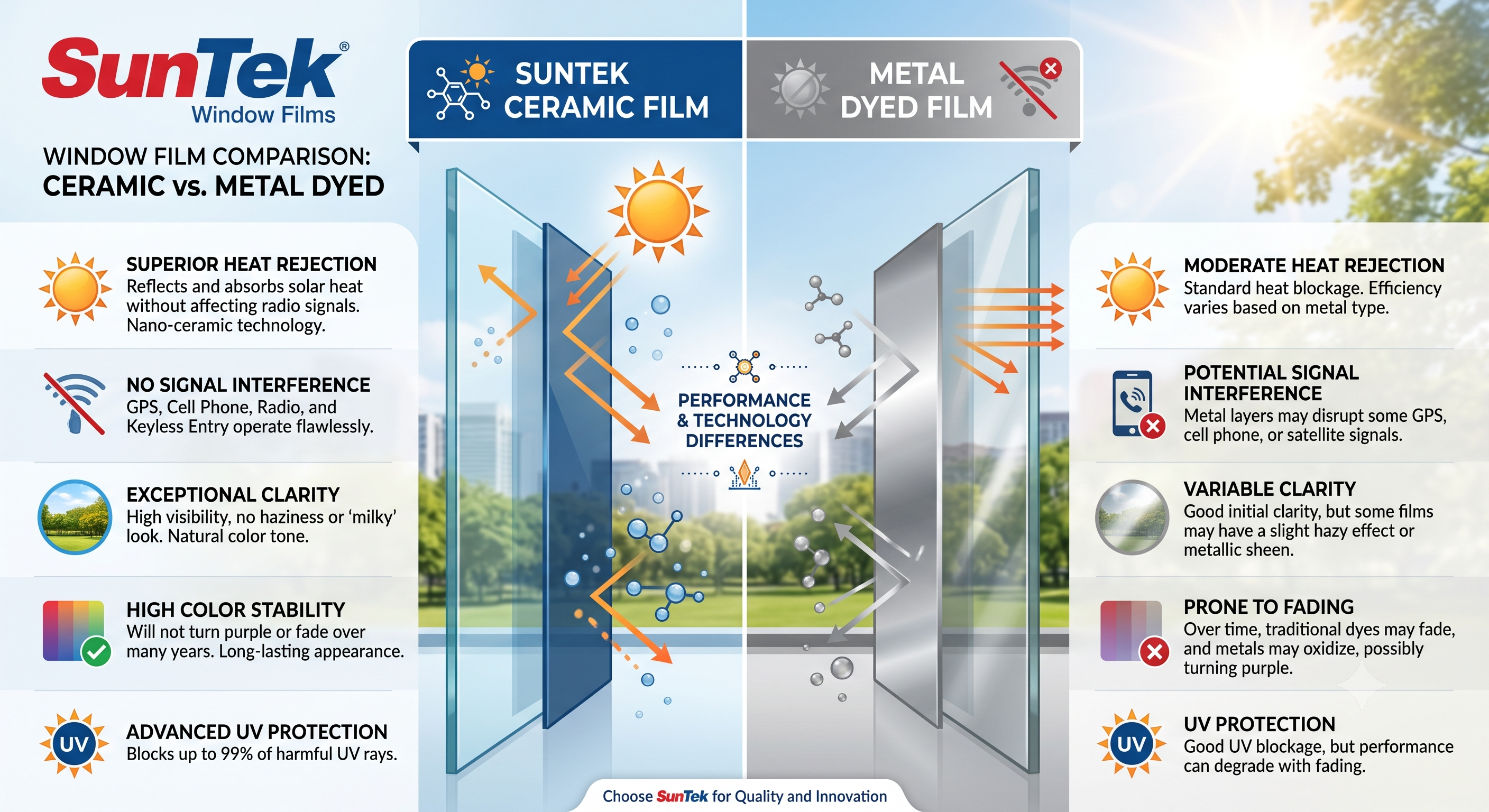
Standard dyed window tint blocks light with a layer of dye sandwiched between adhesive and a protective film. It darkens the glass and that is mostly it. Ceramic tint uses microscopic ceramic particles inside the film that reject infrared (IR) energy — the part of sunlight you actually feel as heat — without making the film any darker.
That is why a 35% ceramic tint can feel noticeably cooler in your cab than a 20% dyed tint on the same car, even though the dyed film looks "darker."
Heat rejection: the only number that matters in Moreno Valley
When summer temps run 95°F to 110°F across Moreno Valley, Perris, and Riverside, the spec to compare is Total Solar Energy Rejected (TSER) and IR rejection.
- Dyed tint: roughly 35–45% TSER, low IR rejection (often under 20%).
- metal dyed tint: roughly 40–50% TSER, moderate IR rejection.
- Ceramic tint : 55–75%+ TSER, 80–95% IR rejection depending on the line.
In practical terms, ceramic film keeps your steering wheel cooler, drops AC load, and protects your dash, leather, and screens from UV fade.
Color stability and signal interference
Cheap dyed tint turns purple after a few summers because the dye breaks down. Ceramic does not contain dye, so it stays neutral and crisp for the life of the film. Ceramic is also metal-free, which means it will not interfere with GPS, Bluetooth, key fob, or built-in cellular signals — a real problem with the old metallic films from the 2000s.
When dyed tint is still okay
If a car is a daily driver you plan to flip in a year, dyed tint at the cheapest 5% you can find is tempting. We get it. But you will feel the difference within a week of driving in summer. The "savings" gets eaten by AC cycles and a hot leather seat.
What we install
VIP Kustomz is a SunTek authorized installer. Our ceramic line carries a lifetime warranty against fade, peel, and bubble, and we have the option to hand cut or cut on a CAD plotter so the film hugs the inside edge of every window.
So which one?
- Daily driver in the Inland Empire → ceramic, 70% on the windshield + your legal shade on the sides.
- Show car or weekend build → ceramic for the IR rejection and color stability.
- Budget rental → dyed is fine, just expect to replace it.
Get a tint quote or see ceramic builds we have done in Moreno Valley.
Ready to book?
Same crew that wrote this post handles every install. Text or call for a quote.
More from Window Tint
California Window Tint Laws Explained (2026 Update)
What shade is actually legal in California, what the windshield rule really says, and how to avoid a fix-it ticket on the 60 freeway.
Top 5 Window Tint Mistakes Every Driver Should Avoid
Cheap film, illegal shades, dirty installs, improper maintenance — here are the five things that ruin a tint job and how to spot them.
How Much Does Window Tint Cost in Moreno Valley?
Real pricing ranges for metal dyedand ceramic window tint on sedans, trucks, and SUVs in Moreno Valley and the Inland Empire.*/